For digital merchants selling intangible goods—such as IPTV subscriptions, SaaS licenses, cloud software, or premium digital agency services—revenue velocity is highly exciting. However, there is a silent cash-flow killer lurking in the backend of global payment networks: Friendly Fraud.
Unlike traditional identity theft where a criminal uses a stolen credit card, friendly fraud is executed by your actual customer.
If you process high volumes through payment networks like PayPal, understanding the mechanics of this behavior and structuring your checkout architecture to fight it is the difference between an enterprise that scales and one that gets permanently limited.
Part 1: Understanding “Friendly Fraud” in the Digital Space
Friendly Fraud (also known as chargeback abuse) occurs when a consumer makes a legitimate online purchase using their own credit card or financial account, receives the digital product or service, and then files a formal dispute with their bank or payment gateway claiming the transaction was unauthorized, fraudulent, or never delivered.
Why Buyers Instigate Friendly Fraud
- The “Free Trial” Loophole: The consumer uses a digital service or streaming window for a specific event (e.g., a weekend live sports broadcast or short-term software project) and files a dispute immediately afterward to force a refund, essentially consuming the product for free.
- Buyer’s Remorse: The customer regrets the expenditure and uses the payment network’s consumer protection laws as a convenient “delete button” for their bank statement.
- Family Disagreements: A dependent uses a shared family PayPal account or card to purchase a digital key or gaming asset without parental consent. Instead of resolving it internally, the account holder reports it to PayPal as an “unauthorized hack.”
For digital merchants, traditional chargeback systems are inherently biased toward the consumer. Because there is no physical shipping tracking number (like a FedEx or DHL confirmation), legacy automated systems routinely assume the merchant failed to deliver the asset.
Part 2: The Critical Proof Needed to Win PayPal Disputes
To win an “Unauthorized Activity” or “Item Not Received” claim on PayPal for a digital asset, you cannot simply write a text message to the dispute resolution agent saying, “The customer is lying.” PayPal resolution agents evaluate cases based on strict institutional criteria. To secure a ruling in your favor, your merchant account must present an Ironclad Digital Evidence Package containing three core components:
1. Explicit Upfront Consent (The Digital Contract)
You must prove the user consciously agreed to specific, unalterable commercial terms before capital changed hands. This requires a dynamic record showing they verified that digital assets are instantly rendered and non-refundable upon access key generation.
2. Cryptographic Device Matching
You must link the buyer’s real-world identity to the digital footprint captured at checkout. If the customer claims, “My account was hacked,” but your system logs show the payment was authorized from the exact same device configuration and IP address they have used to log into their personal account for months, the fraud claim falls apart under audit.
3. Proof of System Consumption (Fulfillment Logs)
You must produce precision backend server event logs. This includes time-stamped confirmation showing the precise second the API generated the digital key, when the welcome email was delivered, and the exact bandwidth or server telemetry data showing the user actively logged in and consumed the digital service.
Part 3: The Smart-Flow Blueprint: How ORA PAY Auto-Wins Disputes
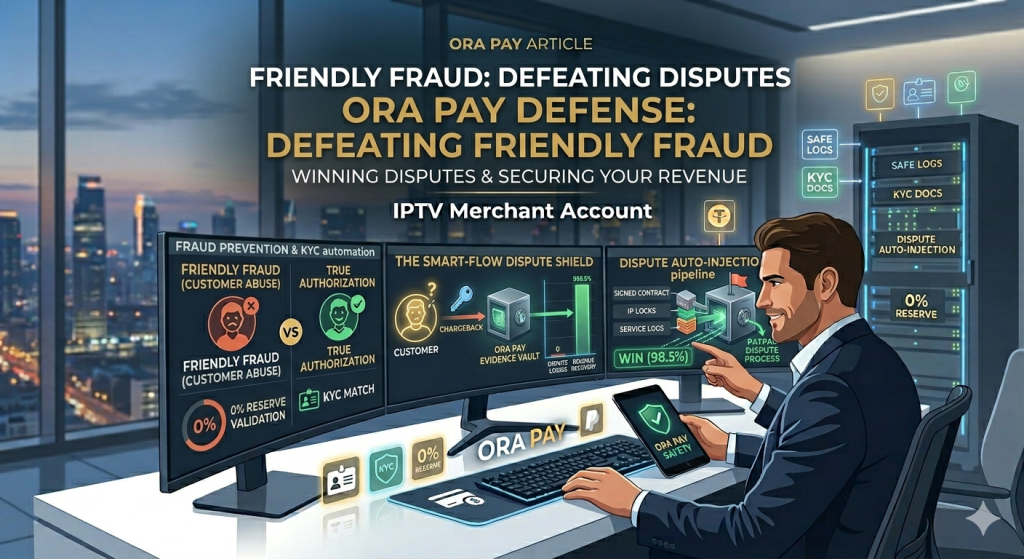
Manually compiling evidence logs for dozens of high-velocity transactions is operationally impossible for a growing business. This is why ORA PAY engineered the Smart-Flow Framework—an automated defensive architecture integrated directly inside your checkout sequence.
Here is the exact technical workflow used to shield your processed capital and win PayPal chargeback claims automatically:
Step 1: Pre-Checkout Digital Contract Signature
Before the payment gateway opens or wallet authorization fields load, the user is required to interact with a dynamic legal pop-up agreement. The customer cannot bypass this step; they must type their name or toggle an authorization validation box. This digital contract states explicitly:
“I authorize this transaction for an instantly rendered digital service. I acknowledge that upon generation of my access credentials, delivery is fully completed, and I waive all rights to standard physical refund parameters.”
Step 2: Footprint & Metadata Vaulting
The moment the contract is signed and the transaction executes, ORA PAY’s backend scripts immediately process and lock the user’s localized network variables:
- Verified IP Mapping: True network routing identifiers, stripped of malicious proxy nodes.
- Hardware Fingerprinting: Specific device configuration hashes, browser version tokens, and operating system attributes.
- Geolocation Verification: Time-stamped data mapping where the client physically initiated the transaction.
This complete tracking payload is bound to the specific transaction ID, encrypted via AES-256 protocols, and archived on an immutable ledger.
Step 3: Automated Dispute Injection (The Knockout Blow)
If a buyer later attempts to file an unauthorized transaction claim on PayPal, ORA PAY’s API does not wait for your manual intervention. Our system triggers an automated dispute injection pipeline.
The system instantly compiles the time-stamped digital contract signature, the locked hardware metadata, and the server service-rendering tokens into an institutional-grade evidence document. This document is automatically uploaded directly into the open PayPal dispute window via backend webhooks. When human PayPal compliance agents review the case, they are presented with an undeniable chain of legal authorization, forcing them to rule in your favor and uphold your merchant safety score.
Part 4: Additional Safeguards for High-Volume Merchants
While deploying an automated defense framework like ORA PAY is your primary line of defense, implementing the following merchant best practices further insulates your business profile from algorithmic flags:
- Clear Soft Descriptors: Ensure the billing statement name (the text that appears on the buyer’s mobile banking app) perfectly matches your website’s primary logo or name. If a user buys from your site but the bank statement reads an unrecognized corporate name, they may initiate a chargeback out of confusion.
- Proactive Live Help Desks: Give consumers an incredibly fast path to reach your internal team. If a user experiences a technical issue or configuration error and can text a responsive support profile via Telegram or live chat, they will resolve the issue with you directly rather than filing a chargeback.
- Automated Risk Screening: Set your system to drop high-risk proxy nodes, malicious automated configurations, and suspicious residential VPNs before the payment processing screen can even execute. Blocking professional card-testing fraudsters from hitting your billing pipelines preserves your overall account standing.
Conclusion: Protect Your Revenue Intentionally
Friendly fraud is an unavoidable operational aspect of running an international digital service enterprise. However, suffering catastrophic merchant account limitations and losing thousands of dollars to unfair chargebacks is entirely optional.
By moving away from standard, unprotected checkout buttons and upgrading your platform to a dedicated solution equipped with Smart-Flow signature tracking, 0% rolling reserves, and automatic dispute evidence injection, you take total control of your processing security.
Stop letting abusive refund loops drain your cash flow. Submit your ORA PAY merchant validation profile today using just your Passport or National ID Card, clear your verification review within 24 hours, and build a permanent wall of protection around your digital business revenue.
